AI-Driven Development: The Rise of Agentic Assistants
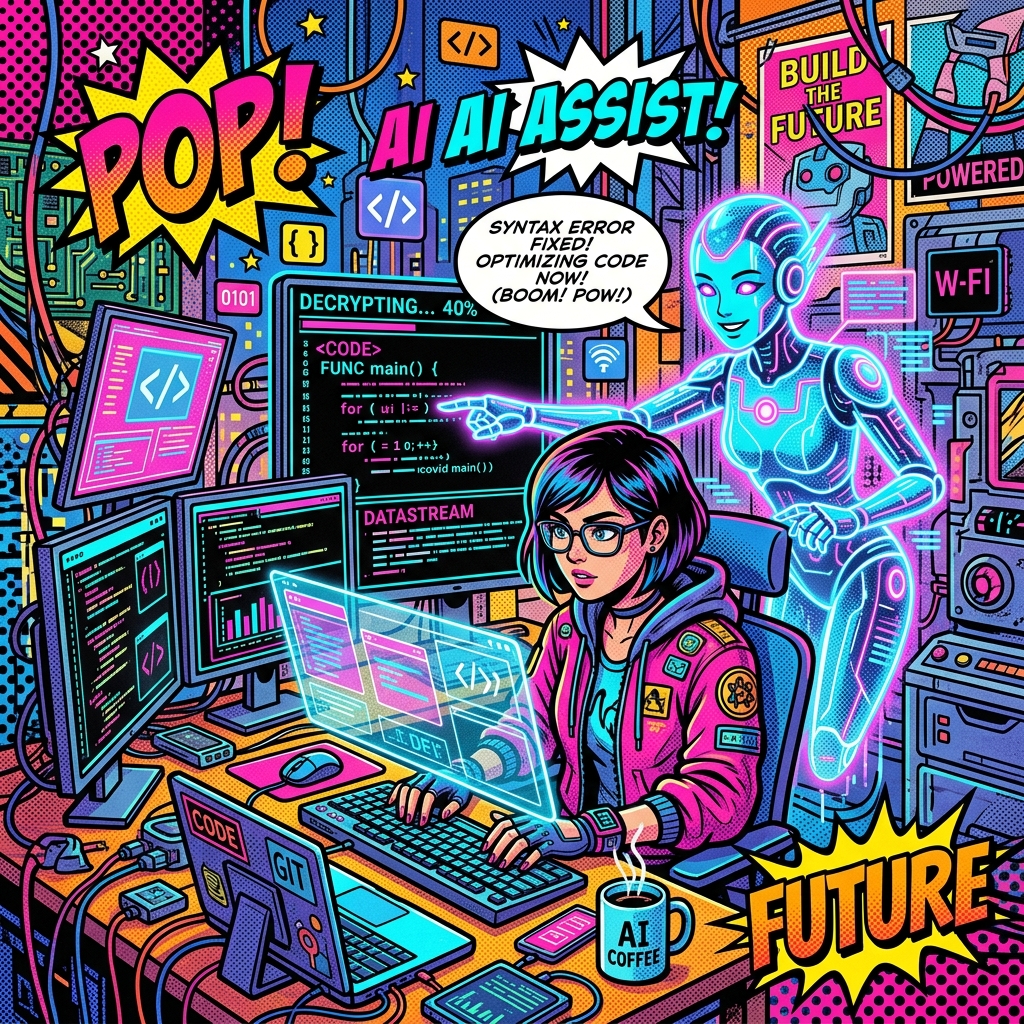
The Rise of Agentic AI: From Chatbots to Autonomous Co-Engineers
The software engineering landscape is currently undergoing its most significant transformation since the invention of the high-level programming language. We are moving beyond the era of "Co-pilots" and "Chatbots" into the age of Agentic AI.
In 2026, the question isn't whether AI can write code for you—that’s a solved problem. The question is whether AI can engineer for you. Agentic AI is the answer.
1. Defining the Agentic Layer: A Paradigm Shift
To understand the impact of Agentic AI, we first need to distinguish it from the Generative AI we’ve used for the last few years. The shift from "Generative" to "Agentic" is not just an incremental update; it is a fundamental shift in how we interact with computation.
The Evolution of Intelligence
The first wave of AI in development (circa 2021-2023) was primarily Autocomplete. Tools like early GitHub Copilot were essentially "Stochastic Parrots" that predicted the next few tokens based on local context. It was useful for reducing keystrokes, but it lacked any understanding of the broader system architecture.The second wave (2024-2025) was Chat-Based Assistance. We gained the ability to "talk" to our code, asking for refactors or explanations. This was a massive leap, but the AI was still a passive observer. It only knew what you told it, and it only did what you explicitly asked for in a single turn. It was the era of "Prompt and Response."
The third wave—the Agentic Wave—replaces the "Passive Assistant" with an "Active Agent."
Generative AI (e.g., ChatGPT-4, early GitHub Copilot):The "Agentic Layer" is essentially a reasoning loop wrapped around a Large Language Model (LLM). At Bergmanis.com, we view this as the "Frontier of the Digital Brand."
2. A Brief History of Automated Engineering
To understand where we are going, we must look at where we started. Automation in software engineering isn't new; it has always been the goal.
3. The Architecture of Autonomy: The P.R.A.R. Loop
The secret sauce of an Agentic Assistant is the P.R.A.R. Loop: Perceive, Reason, Act, Reflect. This loop allows the agent to behave less like a calculator and more like a junior engineer.
Perceive: Understanding the Environment
The agent doesn't just read code; it "perceives" the entire engineering environment. This includes:Reason: Task Decomposition and Planning
Based on a high-level goal (e.g., "Add a dark mode toggle to the dashboard"), the agent doesn't just start typing. It reasons through the requirements. It builds a Work Breakdown Structure (WBS) inside its context: 1. "Analyze if the project uses Tailwind, CSS-in-JS, or vanilla CSS." 2. "Identify the global state management system (Redux, Zustand, or Context)." 3. "Check if there's an existing ThemeProvider that can be leveraged." 4. "Draft the Toggle component and its styles."Act: Interacting with the Real World
This is where the agent utilizes its toolset. It writes code to the file system, creates new directories, installs packages via `npm` or `pip`, and runs build scripts. Crucially, contemporary agents use "Headless Browsers" (like Playwright) to actually see the UI they are building, ensuring that a code change didn't break the layout on mobile devices.Reflect: The Self-Correction Mechanism
This is the most critical step. After "Acting," the agent reflects on the result. It doesn't assume success. It runs the test suite. If a test fails, it reads the stack trace, identifies the bug, and begins a new loop to fix the issue. This feedback loop is what allows an agent to solve complex tasks that would take a human developer several hours of "Trial and Error."4. The Socio-Economic Impact: Displacement vs. Augmentation
The software engineering industry is facing a crossroads. As agents become more capable, the traditional "Entry Level" role is vanishing.
The Vanishing Junior Developer
In the past, junior developers were hired to write unit tests, fix minor bugs, and handle "Boilerplate" code. These are exactly the tasks that agents excel at. Consequently, the bar for entering the industry has shifted. To be a "Junior" in 2026, you must already be an "Architect" of agents.The Rise of the AI Architect
The 10x Developer is no longer a myth; it is the new standard. At Bergmanis.com, we've seen that a single developer, supported by a fleet of high-performance agents, can deliver products that previously required a team of five. This isn't about working harder; it's about shifting the focus from "Syntax" to "Systems."Economic Displacement?
While some roles are being phased out, new ones are emerging. Agent Governance, AI Security Audit, and Knowledge Synthesis are the high-value roles of the next decade. We are moving from "Code Economy" to "Insight Economy."
5. The Human in the Loop: Collaboration as a High-Level Art
The fear that AI will "replace" developers is largely a 2023 conversation. In 2026, we have a clearer picture: AI replaces tasks, not roles.
The role of the developer has evolved into that of an AI Orchestrator or Product Architect. Your value is no longer in how fast you can type `for` loops or how well you remember the syntax of a specific library. Your value is in: 1. Design Thinking: Defining what needs to be built and why it matters to the user. 2. Quality Governance: Setting the standards for performance, accessibility, and security that the agents must meet. 3. Complex Debugging: Solving the rare "edge cases" where logic becomes so abstract or non-linear that even the most advanced agents get stuck in a reasoning loop.
The New Developer Skill Set
To thrive in this environment, the "modern" developer must master:6. Technical Deep-Dive: Building an Agentic Bridge
How do we actually build these loops? It’s not magic; it’s a series of API calls and logic gates. Below is an expanded breakdown of a "Task Orchestrator" agent built in Node.js, similar to the tools we use to manage the architecture at Bergmanis.com.
The Workflow Loop logic
```javascript /* Conceptual Breakdown of an Autonomous Dev Agent This demonstrates the "Reasoning Loop" that sets agents apart from standard LLM completions. */
class DevAgent { constructor(apiKey, repoPath) { this.llm = new LLMProvider(apiKey); this.environment = new SandboxEnvironment(repoPath); this.memory = []; // Persists across task turns }
async executeGoal(userGoal) { // Phase 1: Planning // The agent doesn't write code yet; it outlines the strategy. let taskList = await this.llm.generatePlan(userGoal, this.environment.getFiles()); console.log(`Phase 1 Complete: ${taskList.length} tasks identified.`);
while (!taskList.isComplete()) { const task = taskList.getCurrentTask(); // Phase 2: Action // The agent interacts with the actual file system. const codeChanges = await this.llm.writeCode(task, this.environment.getContext()); const applyResult = await this.environment.applyChanges(codeChanges); if (applyResult.error) { console.error("Syntax Error detected during application. Pivoting..."); continue; }
// Phase 3: Verification (Reflection) const testResult = await this.environment.runTests(); if (testResult.passed) { taskList.markCurrentTaskComplete(); this.memory.push({ task, status: 'success' }); } else { // Self-Correction Logic // The core of agency: The agent reads its own failures. console.log("Test failed. Agent is analyzing logs for self-correction..."); const fix = await this.llm.analyzeError(testResult.logs, task, this.memory); await this.environment.applyChanges(fix); } } return "Goal Successfully Achieved."; } } ```
This simple loop encapsulates the transition from "Text In / Text Out" to "Problem In / Solution Out." This is how we build the future.
7. Security and Governance: The Risks of Autonomy
Giving an AI agent access to a terminal and a file system is inherently risky. As we embrace this technology, we must implement strict governance:
8. A Day in the Life of a 2026 Developer
What does a typical morning look like now?
This is not a future fantasy; this is the reality for teams integrating agentic workflows today.
9. Future Projections: 2027 and Beyond
By 2027, I believe we will see the rise of Self-Healing Infrastructure. Imagine an agent that monitors your production health, identifies a memory leak, writes a fix, tests it in a staging environment, and deploys it—all while you are sleeping.
The "Digital Brand" of the future won't just be built by code; it will be built by Intelligence. We will see Context-Aware Branding, where agents can not only write the code but also ensure that every UI change aligns perfectly with the brand's aesthetic guidelines, tone of voice, and accessibility standards without being told.
Conclusion: Lead the Fleet
Agentic AI isn't just a tool; it's a teammate. At Bergmanis.com, we are leaning into this "Agent-First" philosophy to deliver digital architecture that is faster, more secure, and infinitely more scalable than ever before.
The age of the "manual coder" is coming to an end. The age of the AI Architect has begun. The question for you is: Are you ready to lead the fleet?
---
Artūrs Bergmanis is a Full Stack Architect and founder of Bergmanis.com, specializing in high-performance digital architecture and autonomous AI integrations.Ready to build your digital brand?
Get a custom quote today and start building a high-performance digital presence.